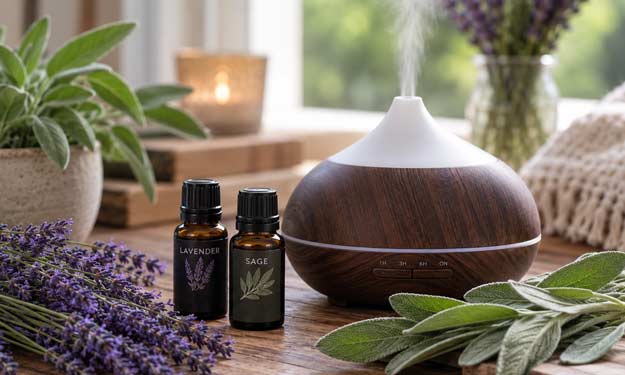
Lavender and Sage Diffuser Blends
I recently smelled lavender sage diffuser blend while I was in a shop and really liked the combination. It was fresh and herbal, with the lavender softening the stronger scent of the sage and once I smelled it, I started thinking about using the two together in my diffuser. I'll admit, this probably won't be a scent combination for everyone, but I really like it.
Lavender and sage work surprisingly well together. Lavender has its familiar floral scent, but it also has fresh herbal notes that blend nicely with the greener, earthier scent of sage. Sage is quite a bit stronger, so you don't need much of it to notice it in a blend.
I started with a simple lavender and sage combination, but there are quite a few essential oils that can be added depending on the scent you're looking for. Lemon makes the blend brighter and fresher, cedarwood gives it a more earthy scent, and bergamot adds a softer citrus note.
What Lavender and Sage Smell Like
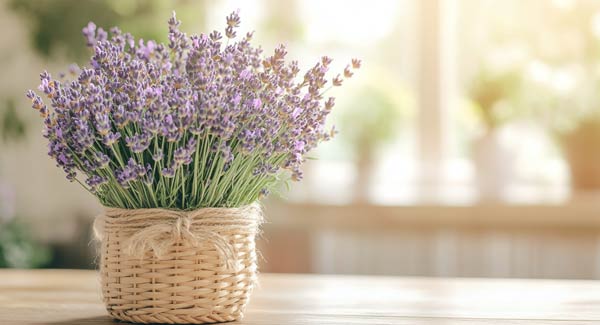
Lavender essential oil (Lavandula angustifolia) has a soft floral and herbal scent. Although lavender is usually thought of as a floral essential oil, it isn't overly sweet and has enough of a fresh, green scent to pair well with other herbs.
Sage essential oil (Salvia officinalis) has a much stronger herbal scent. It's green, earthy, slightly camphoraceous, and smells more like the herbs you might have growing in the garden. It can easily overpower lavender if you use too much, which is why most of these blends use more lavender than sage.
Together, the two smell fresh, herbal, and clean without being overly floral. If you like herbal home fragrances, this is a really nice combination to experiment with.
Lavender Sage Diffuser Blends
I would start with just lavender and sage before adding anything else. This gives you a chance to see how you like the combination and whether you prefer more lavender or a little more sage.
Fresh Lavender & Sage
- 4 drops lavender essential oil
- 2 drops sage essential oil
What it smells like: Fresh and herbal with a light floral scent from the lavender. The sage is noticeable without completely taking over the blend.
Lavender Sage and Lemon
Lemon is a good addition if you want the blend to smell a little brighter and fresher. It works well with both lavender and sage and helps lighten the stronger herbal scent of the sage.
Fresh Herb Garden
- 3 drops lavender essential oil
- 1 drop sage essential oil
- 2 drops lemon essential oil
What it smells like: Fresh, bright, and herbal with a clean citrus scent from the lemon.
Lavender Sage and Bergamot
Bergamot is another citrus oil that works nicely with lavender and sage, but it smells softer than lemon. It has both citrus and slightly floral notes, so it blends especially well with lavender.
Lavender Sage & Bergamot
- 3 drops lavender essential oil
- 1 drop sage essential oil
- 2 drops bergamot essential oil
What it smells like: Herbal with a softer citrus scent and just a little sweetness. The bergamot makes this one less sharp than the lemon blend.
Lavender Sage and Cedarwood
Cedarwood is a good choice if you prefer earthy and woody scents. It adds some warmth to the lavender and sage without covering up either one.
Lavender in the Woods
- 3 drops lavender essential oil
- 1 drop sage essential oil
- 2 drops cedarwood essential oil
What it smells like: Herbal, woody, and earthy with the lavender adding a softer floral note.
Lavender Sage and Eucalyptus
Eucalyptus makes this combination smell even fresher, but both eucalyptus and sage are strong oils, so I would start with only one drop of each.
Fresh Herbal Air
- 3 drops lavender essential oil
- 1 drop sage essential oil
- 1 drop eucalyptus essential oil
- 1 drop lemon essential oil
What it smells like: Crisp, fresh, and herbal. The lavender helps soften the stronger eucalyptus and sage while the lemon adds a little brightness.
Lavender Sage and Rosemary
Rosemary takes this blend even further in the herbal direction. Since rosemary and sage can both be strong, I use more lavender and add a little lemon to keep the blend from becoming too heavy.
Herb Garden
- 3 drops lavender essential oil
- 1 drop sage essential oil
- 1 drop rosemary essential oil
- 1 drop lemon essential oil
What it smells like: Very herbal, green, and fresh with just enough lavender and lemon to soften the rosemary and sage.
Lavender Sage and Orange
If you want something a little softer, sweet orange is another oil worth trying. It adds a light sweetness and citrus scent without completely changing the lavender and sage combination.
Soft Lavender & Sage
- 3 drops lavender essential oil
- 1 drop sage essential oil
- 2 drops sweet orange essential oil
What it smells like: Soft, herbal, and slightly sweet with a mild citrus scent.
Lavender Sage and Frankincense
Frankincense adds a deeper, slightly woody scent to lavender and sage. I like this combination for something a little warmer and less bright than the blends made with lemon or bergamot.
Lavender Sage & Frankincense
- 3 drops lavender essential oil
- 1 drop sage essential oil
- 2 drops frankincense essential oil
What it smells like: Herbal, earthy, and slightly woody with the softer scent of lavender in the background.
Adjusting the Diffuser Blends
These recipes use six drops as a starting point, but you can adjust them for the size of your diffuser and how strong you like the scent. I use a 500 ml diffuser, so I often use more drops than the recipes listed here, but I keep the proportions about the same.
I would be a little more careful when increasing the sage. For example, if I wanted to make the lavender, sage, and lemon blend stronger, I would probably increase the lavender and lemon first rather than automatically doubling the sage. You can always add another drop if you want more of the herbal scent.
And, as with most diffuser recipes, these aren't rules. If you like more lavender, add more lavender. If you want it brighter, add another drop of lemon or bergamot. It's easy to adjust a blend once you've had it running for a little while and can tell which scents you want more or less of.
Sage and Clary Sage
Before making these blends, check which sage essential oil you have because sage and clary sage are two different oils.
Common sage (Salvia officinalis) has a stronger, sharper herbal scent and is the sage I'm referring to in these recipes. Clary sage (Salvia sclarea) has a softer, sweeter, more earthy scent. Lavender also blends well with clary sage, but the finished scent will be different from the fresh herbal lavender and sage combination I was trying to create here.
Lavender Sage Diffuser Blends
Sage is a strong essential oil, so a little goes a long way in a diffuser. Start with fewer drops until you know how strong it is in your space, especially if you're using it for the first time.
As with any essential oil, use a diffuser in a well-ventilated area and follow the instructions for your particular diffuser. Use extra care when diffusing essential oils around children and pets, and make sure pets are able to leave the room if they don't like the scent.
I'm still experimenting with lavender and sage, but I can already see this becoming one of those combinations I use quite a bit. I really like the original two-oil blend, but adding just one or two other oils gives you quite a few different ways to use it depending on what you feel like having in the diffuser that day.
Essential Oil Diffuser Calculator
Not sure how many essential oil drops to use in your diffuser? This calculator gives a general starting point based on diffuser size, scent strength, room size, and whether you are using a single essential oil or a blend. It also includes a simple recipe scaling tool to help adjust diffuser blends for different diffuser sizes.
Quick Diffuser Drop Guide
- 100 mL diffuser: 3 to 5 drops
- 150 mL diffuser: 4 to 6 drops
- 200 mL diffuser: 6 to 8 drops
- 300 mL diffuser: 8 to 10 drops
- 400 mL diffuser: 10 to 12 drops
- 500 mL diffuser: 12 to 15 drops
Diffuser Recipe Scaling Tool
Already have a diffuser recipe but need to adjust it for a different diffuser size? Enter the original diffuser size, the number of drops in the recipe, and your diffuser size below.