Dyshidrotic Eczema: What It Is and Why It Happens
Dyshidrotic eczema is a type of skin condition that shows up as small, itchy blisters on the hands, fingers, and sometimes the feet. These blisters can be filled with fluid and cause burning or itching and may leave the skin cracked or scaly once they dry out. It often flares up suddenly and can be frustrating to deal with because the symptoms tend to come and go.
While it isn’t contagious, it can make everyday tasks - like washing dishes, walking, or gardening - uncomfortable. I was talking with my daughter and this is what she found and thinks is what is happening with her feet. I had never heard of this and started doing additional research from what she found out.
What Causes Dyshidrotic Eczema?
Doctors don’t know one single cause, but there are some clear triggers that play a role:
- Stress and anxiety – Emotional stress can set off flare-ups or make symptoms worse.
- Allergies and sensitivities – Nickel, cobalt, detergents, and certain chemicals can irritate the skin.
- Sweating and heat – Warm weather or sweaty hands and feet often trigger blisters.
- Atopic conditions – People who already deal with eczema, hay fever, or asthma are more likely to experience this type.
- Moisture imbalance – Too much hand washing, constant water exposure, or dryness can both contribute to outbreaks.
It usually happens in cycles - blisters form, itch, dry out, peel, and then may return later.
Dyshidrotic Eczema vs. Heat Blisters
Dyshidrotic Eczema Blisters
- Usually tiny, clustered, and very itchy.
- Filled with clear fluid.
- Show up on the hands, fingers, and feet (especially sides of fingers and soles of feet).
- Linked to triggers like stress, allergies, sweating, and irritants.
- Often cycle: form → itch → dry out/peel → flare again.
Heat Blisters (friction or burn blisters)
- Caused by heat, burns, or skin rubbing against shoes/clothing.
- Usually larger, more isolated blisters, not grouped.
- Can appear anywhere skin has been irritated by heat or friction.
- Usually heal once the cause (heat or rubbing) is gone.
So while both can be fluid-filled and uncomfortable, dyshidrotic eczema is a chronic skin condition with flare-ups, while heat blisters are more of a one-time response to irritation or heat.
Home Remedies for Dyshidrotic Eczema Relief
While medical care is sometimes needed, there are simple steps you can take at home to calm the skin and reduce flare-ups:
Cool Compresses
Applying a cool, damp cloth for 10–15 minutes can help reduce itching and swelling.
Moisturize Regularly
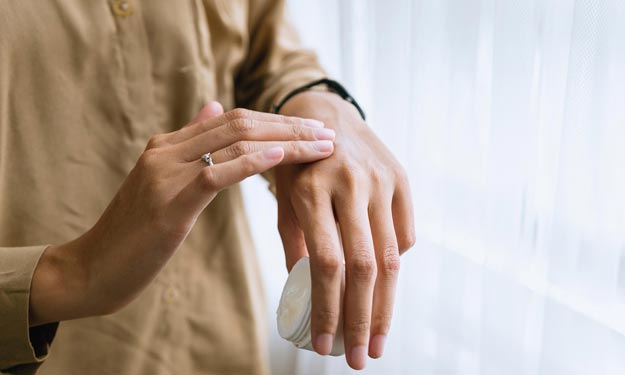
Thick, fragrance-free creams or ointments (like petroleum jelly, shea butter, or natural oils) help lock in moisture and protect the skin barrier.
Oatmeal or Epsom Salt Soaks
Soaking hands or feet in an oatmeal bath or diluted Epsom salt water can ease itching and dry out blisters gently.
Cortisone Creams
Over-the-counter hydrocortisone eczema creams can help calm redness, itching, and inflammation. Apply a thin layer to affected skin as directed, usually once or twice daily. For more severe cases, a doctor may prescribe a stronger corticosteroid cream.
Protective Gloves & Socks
- Use cotton-lined gloves when cleaning, gardening, or using water.
- For feet, wear breathable cotton socks and change them if they get damp.
- Avoid shoes that make your feet sweat - moisture can trigger blisters.
Natural Oils
Coconut oil, sunflower oil, or jojoba oil can soothe irritated skin and keep dryness from worsening.
Stress Management
Because stress plays such a big role, practices like meditation, light exercise, or even a daily walk can make a difference.
Dyshidrotic Eczema on the Feet
When dyshidrotic eczema shows up on your feet, the blisters can make walking painful. My daughter thinks this is what’s going on with her feet, and interestingly, it typically only happens to one foot and can be quite painful when it flares up. I found out that this is actually pretty common - sometimes flare-ups can affect just one hand or one foot instead of both.
Here’s how to care for flare-ups on the feet:
- Soak your feet in cool water, oatmeal, or diluted vinegar for 10–15 minutes.
- Dry thoroughly (between the toes too) before putting on socks.
- Moisturize right away with a thick, fragrance-free cream.
- Rotate shoes so your feet aren’t trapped in damp footwear.
- Use cortisone cream sparingly on the tops and sides of feet where blisters appear—avoid broken skin unless a doctor advises.
- Avoid footwear that traps moisture – rubber boots, plastic shoes, and even tight sneakers can create a sweaty environment that triggers blisters. If you need to wear them, always pair with clean, breathable cotton socks.
- Sandals or slippers may help – open-toed or breathable shoes allow air to circulate and keep feet drier. Just make sure they’re comfortable, not rubbing against blistered areas, and keep them clean to prevent infection.
When to Seek Medical Care
If blisters are very painful, infected (red, warm, oozing pus), or keep coming back despite home care, it’s a good idea to see a dermatologist. Prescription creams or other treatments may be needed.
Living with dyshidrotic eczema can be uncomfortable, especially when it affects your feet and hands, but understanding the triggers and having a few reliable remedies - including cortisone creams, moisturizing, and good foot care - makes it easier to manage. With the right approach, many people are able to keep flare-ups under control and prevent symptoms from interfering with everyday life.