Amber, Lily & Oak Essential Oil Blends
I have a few candles with scents like Oak & Amber and Oak & Lily that I really like. They aren't strong or overly sweet. The scents are soft, warm, slightly woody, and subtle enough that they don't take over the entire room.
Because you can't get essential oils for oak, amber, or lily, you have to find the oils that will work for these blends. There isn't an amber or lily essential oil to simply add to these blends, and the oak scent used in candles isn't usually coming from oak essential oil either.
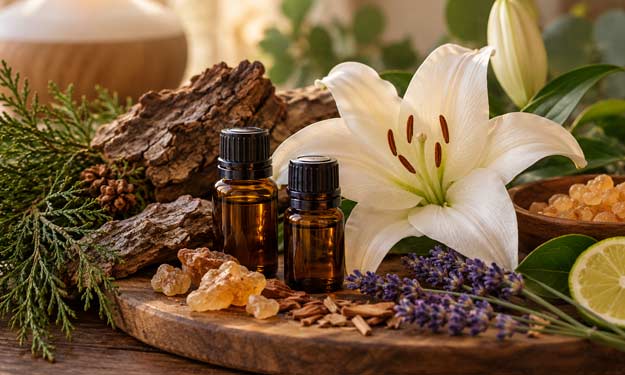
Instead, I used essential oils with warm, woody, and soft floral scents to create something similar. Cedarwood has that dry woody base, rosewood adds a softer woody-floral note, frankincense brings warmth and depth, and small amounts of bergamot, lavender, and geranium can lighten and soften the blends.
The results are not an exact copy of a fragrance oil candle. These are essential oil blends inspired by the same types of scents, and I actually like how they turned out, they’re quite nice.
Oak & Amber Essential Oil Blend
Amber scents are usually warm, smooth, slightly sweet, and sometimes woody or resinous. Since there isn't an amber essential oil, I used frankincense to add resinous warmth without making the blend too sweet.
Rosewood is nice because it sits somewhere between woody and floral. Combined with cedarwood, it creates a softer wood scent than cedarwood would on its own.
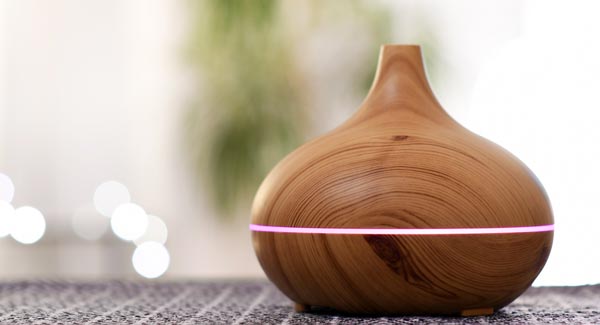
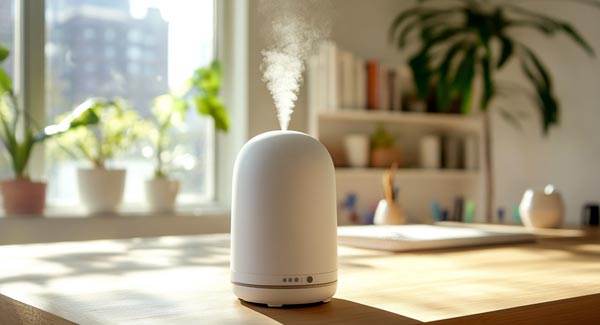
Oak & Amber Diffuser Blend
For a small 100–200 ml diffuser:
- 2 drops Cedarwood Atlas Essential Oil
- 2 drops Rosewood Essential Oil
- 2 drops Frankincense Essential Oil
- 1 drop Bergamot Essential Oil
This blend is warm and woody without being heavy. Bergamot adds just enough brightness to keep the cedarwood and frankincense from becoming too deep.
For a larger diffuser, increase the oils proportionally rather than adding a large number of extra drops at once. You can always add more if you want a stronger scent.
Oak & Lily Essential Oil Blend
Lily is a little more difficult to recreate naturally because there isn't a true lily essential oil commonly used in aromatherapy. Rather than trying to make the blend smell exactly like a lily fragrance oil, I wanted a soft floral scent over a light woody base.
Rosewood works especially well for this because it has both woody and gently floral characteristics. Lavender adds another soft floral layer, while a single drop of geranium gives the blend a little more floral depth without turning it into a geranium-heavy scent.
Oak & Lily Diffuser Blend
For a small 100–200 ml diffuser:
- 2 drops Rosewood Essential Oil
- 1 drop Cedarwood Atlas Essential Oil
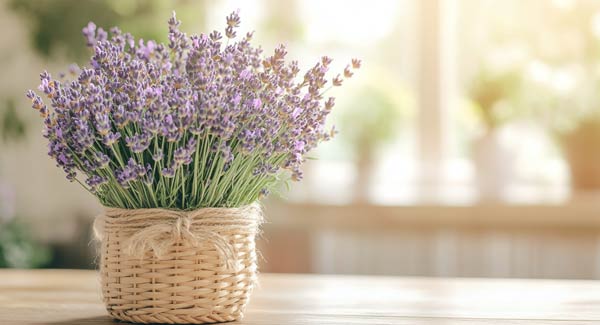
- 2 drops Lavender Essential Oil
- 1 drop Geranium Essential Oil
- 1 drop Bergamot Essential Oil
This one is lighter than the Oak & Amber blend. The cedarwood stays mostly in the background while the rosewood, lavender, and geranium create the softer floral side of the scent.
If you prefer an even more delicate floral scent, start with just one drop of lavender and add the second after the diffuser has been running for a few minutes.
Why Rosewood Works In These Oak Essential Oil Blends
Rosewood essential oil (Aniba rosaeodora) is rich in linalool, one of the aromatic compounds that contributes to its soft floral and woody scent. That's one reason it works so well in both of these blends.
It helps soften cedarwood in the Oak & Amber blend and provides a natural transition between the wood and floral oils in Oak & Lily.
Note: The rosewood tree has a history of overharvesting, and genuine rosewood essential oil should come from a reputable, responsibly sourced supplier. Ho Wood essential oil is often used as an alternative because it also contains a high percentage of linalool and has some similar aromatic qualities.
If you already have Ho Wood, it can be substituted for rosewood in these recipes.
Essential Oil Diffuser/Drop Calculator
The amount of drops you add to your diffuser can vary depending on the size of your diffuser and how strong you like the scent. Smaller diffusers generally need fewer drops, while larger diffusers may need a few more. You can use the diffuser calculator below to find a good starting point based on your diffuser size and how light or strong you prefer the scent.
Essential Oil Diffuser Calculator
Not sure how many essential oil drops to use in your diffuser? This calculator gives a general starting point based on diffuser size, scent strength, room size, and whether you are using a single essential oil or a blend. It also includes a simple recipe scaling tool to help adjust diffuser blends for different diffuser sizes.
Quick Diffuser Drop Guide
- 100 mL diffuser: 3 to 5 drops
- 150 mL diffuser: 4 to 6 drops
- 200 mL diffuser: 6 to 8 drops
- 300 mL diffuser: 8 to 10 drops
- 400 mL diffuser: 10 to 12 drops
- 500 mL diffuser: 12 to 15 drops
Diffuser Recipe Scaling Tool
Already have a diffuser recipe but need to adjust it for a different diffuser size? Enter the original diffuser size, the number of drops in the recipe, and your diffuser size below.
Turning the Blends into a Room Spray
These same combinations can also be used as a room spray. For a spray, however, essential oils shouldn't simply be added to a bottle of water. Essential oils and water don't mix, so the oils need an appropriate solubilizer or a properly formulated alcohol-based spray.
Oak & Amber Room Spray
For a 4-ounce (120 ml) spray bottle:
- 8 drops Cedarwood Atlas Essential Oil
- 8 drops Rosewood Essential Oil
- 8 drops Frankincense Essential Oil
- 4 drops Bergamot Essential Oil
- Solubol, according to the manufacturer's recommended ratio
- Distilled water to fill the bottle
Combine the essential oils with the Solubol first and mix well, then add distilled water, leaving a little room at the top for the sprayer.
This is intentionally a lightly scented room spray. If you want it a little stronger, you can increase the essential oils while keeping the same proportions and adjusting the amount of Solubol accordingly.
Oak & Lily Room Spray
For a 4-ounce (120 ml) spray bottle:
- 8 drops Rosewood Essential Oil
- 4 drops Cedarwood Atlas Essential Oil
- 8 drops Lavender Essential Oil
- 4 drops Geranium Essential Oil
- 4 drops Bergamot Essential Oil
- Solubol, according to the manufacturer's recommended ratio
- Distilled water to fill the bottle
Mix the essential oils with the Solubol before adding the distilled water. This is also a subtle room spray rather than a heavily scented air freshener.
How Much Solubol Do You Need?
Solubol is a natural dispersant made specifically for adding essential oils to water-based products. The amount you need depends on the directions provided with the particular Solubol you're using.
Some Solubol products recommend approximately four parts Solubol for every one part essential oil, but check the directions on your product rather than assuming every formulation uses the same ratio.
Because these room sprays contain water and don't contain a broad-spectrum preservative, I recommend making small amounts, keeping the bottle clean, and replacing the spray if you notice any change in its appearance, scent, or consistency.
Questions You May Have
Is amber an essential oil?
No. There isn't an amber essential oil. Amber scents are created by combining aromatic ingredients to produce a warm, often slightly sweet or resinous scent.
Is there a lily essential oil?
True lily essential oil isn't commonly available for aromatherapy. Lily scents found in candles, perfumes, and other scented products are generally created using fragrance ingredients.
What essential oils smell woody like oak?
Cedarwood, rosewood, Ho Wood, sandalwood, and amyris can provide different types of woody scents. For these blends, I used Cedarwood Atlas and rosewood to create a soft woody base rather than trying to duplicate oak exactly.
Quick Tip When Measuring Drops
I know how tricky it is to get just one or two drops of an essential oil, especially when a bottle decides to pour faster than expected. A little oil can also collect around the dropper insert or the neck of the bottle where the cap screws on.
If this happens, use a clean paper towel to wipe away any oil before putting the cap back on. If you're wiping more than one bottle, use a clean section of the paper towel for each oil so you don't transfer one scent to another. It only takes a small amount of essential oil left on the paper towel to carry the scent to the next bottle.
Keep the Oak Essential Oil Blends Subtle
These aren't blends that need a lot of essential oil to work. In fact, using too much cedarwood, frankincense, or geranium can quickly change them.
Too much cedarwood can make Oak & Amber smell much drier and more traditionally woodsy. Too much frankincense can make the resinous note dominate. And in Oak & Lily, too much geranium can turn a soft floral blend into something that clearly smells like geranium.
Starting with fewer drops also makes it easier to adjust the blend. Let the diffuser run for several minutes before deciding it needs more.
The goal with both of these blends is a scent that stays in the background: warm, soft, woody, and inviting rather than strong or perfume-like. That's what I liked about the candles in the first place, and these essential oil combinations capture much of that same feeling without using synthetic fragrance oils.